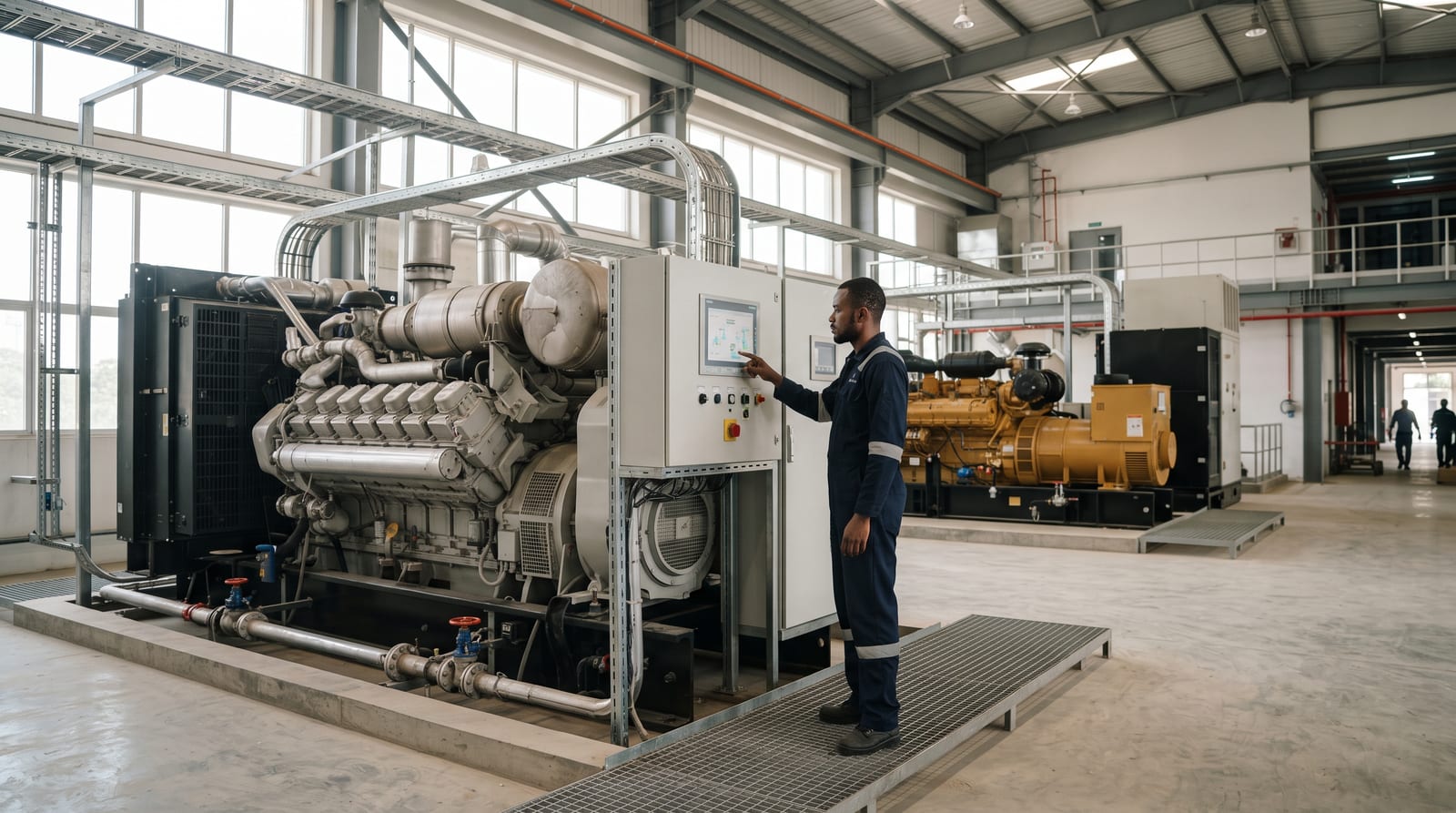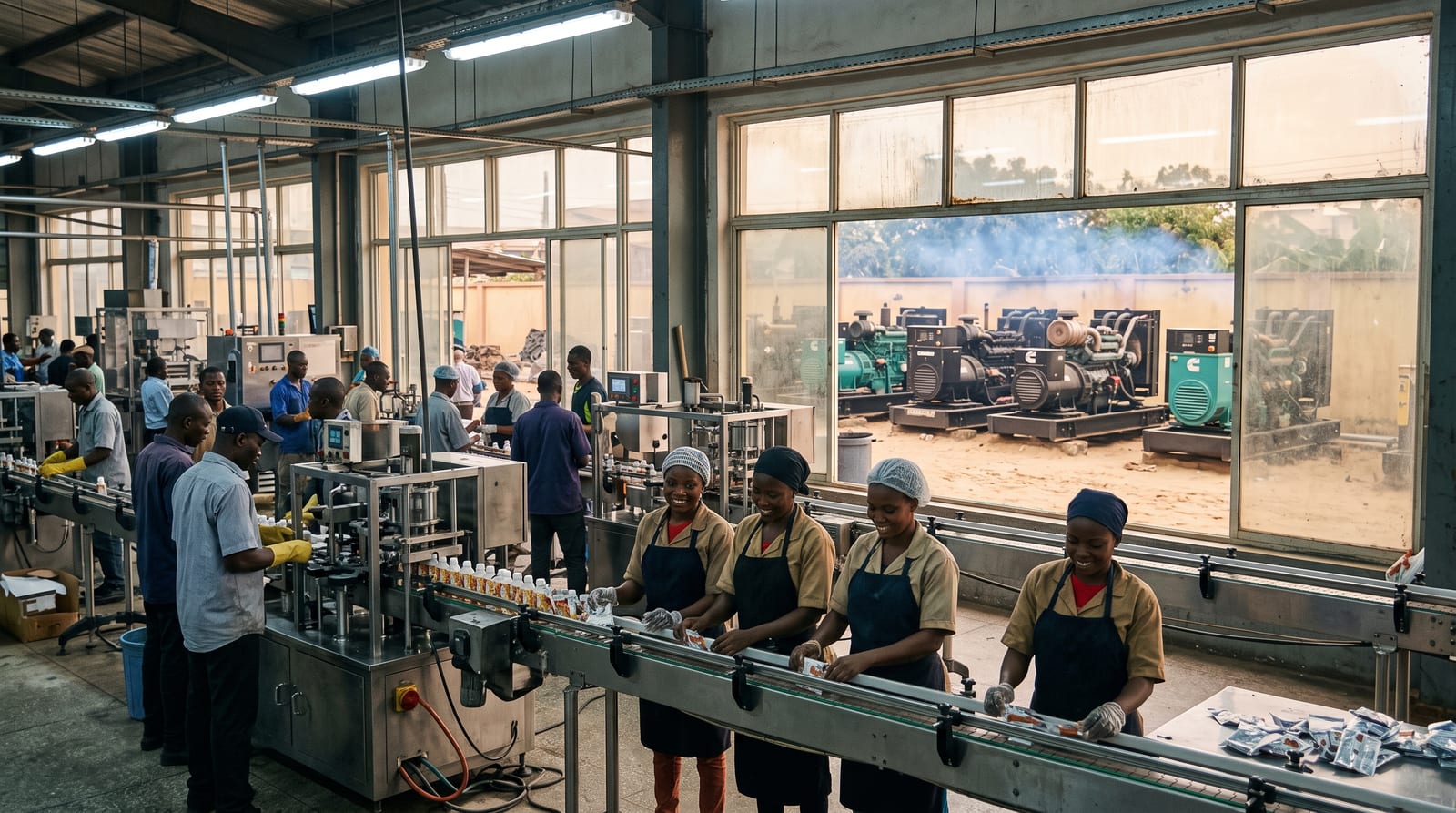
If your premises sit on a Band A feeder, you pay the highest electricity tariff in Nigeria, ₦209.5 per kWh (Opaindex), on the promise of at least 20 hours of supply a day.
In February and March 2026, the grid could not keep that promise.
So NERC ordered DisCos to give eligible Band A customers credit for the shortfall. Prepaid customers were to get token credits. Postpaid customers were to get bill adjustments. The deadlines were 31 May and 30 June 2026.
Here is the question most businesses never asked: did you actually get yours?
This piece explains what the order says, how to check whether you were credited, how to escalate if you were not, and how to build the evidence that means you never have to guess again.
What NERC actually ordered
NERC issued Directive No. NERC/2026/002 on the Special Compensation of Band A Customers Arising from Grid Generation Constraints. It covers eligible Band A customers affected by shortfalls between February and March 2026 (EBC Financial Group).
The formula depends on your customer class:
| Customer type | Credit | Form |
|---|---|---|
| Non-Maximum Demand (smaller users) | 20% of the approved February 2026 energy cap for the affected feeder | Prepaid: token credit. Postpaid: bill adjustment |
| Maximum Demand (larger commercial and industrial) | 20% of the average energy billed per MD customer in February 2026 | Prepaid: token credit. Postpaid: bill adjustment |
And the timing:
- February compensation: due by 31 May 2026.
- March compensation: due by 30 June 2026.
One more line matters a lot: NERC directed DisCos not to offset the credits against existing customer debts. If you owed your DisCo money, it was not allowed to swallow your credit.
Why this is bigger than one credit
This order sets a precedent. As EBC's analysts put it, it signals that "premium tariff bands carry enforceable service obligations." If you pay for 20 hours and receive less, the regulator has now shown it will make DisCos pay back.
The background explains why it happened. NERC's April 2026 factsheet showed grid plant availability at just 31 percent: 4,286MW available out of 13,625MW installed. In the first quarter of 2026, average available generation fell 17.45 percent from the previous quarter (NERC Q1 2026 Report). Grid collapses in late 2025 and early 2026 left Lagos, Abuja and Port Harcourt in darkness (BusinessDay).
Every hour that Band A did not deliver, most businesses ran generators instead, at roughly three times the cost per kWh. The credit does not cover that diesel. But it is money you are owed.
Step 1: Confirm you were eligible
Three questions:
Is your feeder classified Band A? DisCos publish feeder band classifications. Find your feeder name on your bill, your meter's account details or your DisCo's customer portal, and check its band.
Were you on that feeder in February and March 2026? New connections, relocations and feeder transfers can change this.
Are you Maximum Demand or non-MD? Your bill or account category will say. It decides which formula applies.
If all three check out, you were in scope.
Step 2: Check whether the credit arrived
If you are prepaid
Look for a compensation token or an unusual credit on your meter between May and July 2026:
- Check your vending history on the DisCo portal or app.
- Check SMS messages from your DisCo around those dates.
- Check the meter's credit history if it keeps one.
- Ask your vendor or facility team whether a token was pushed or had to be keyed in manually.
If you are postpaid
Look at your May, June and July 2026 bills for a line described as compensation, adjustment or credit. Compare those bills with a normal month's bill to see whether a reduction appears.
If you are an MD customer
Ask your DisCo account officer for the calculation: your February 2026 billed energy, the average energy billed per MD customer on your feeder or in your class, and the 20 percent credit applied. MD credits can be large enough to be worth a formal written request.
Step 3: If you did not receive it, escalate in writing
Keep everything in writing, with dates and reference numbers.
1. Write to your DisCo's Customer Complaints Unit. State your account number, meter number, feeder name, band, customer class, and that you are requesting confirmation of the credit due under NERC/2026/002 for February and March 2026. Ask for the amount and the date it was applied, or the reason it was not.
2. Keep the complaint reference. DisCos must log complaints and respond.
3. Escalate to the regulator if unresolved. If the DisCo does not resolve it, escalate to NERC's consumer complaint channel (its Forum Offices). If your state has taken over electricity regulation and your DisCo operates under a state framework, complaints may now go to the State Electricity Regulatory Commission. Consumers in transferred states have been directed to take complaints there (BusinessDay). Sixteen states had completed the transfer by July 2026.
4. Remind them about the debt rule. If the DisCo says your credit was used against arrears, point to the directive's instruction that credits must not be offset against existing debts.
A short template
Subject: Request for Band A compensation under NERC/2026/002
Account number: … Meter number: … Feeder: … Band: A. Customer class: MD / Non-MD.
Under NERC Directive NERC/2026/002, eligible Band A customers were due compensation for supply shortfalls in February 2026 (by 31 May 2026) and March 2026 (by 30 June 2026). Please confirm the amount credited to this account for each month, the date and method of credit, and the calculation applied. If no credit was applied, please state the reason. Please note the directive's instruction that compensation must not be offset against existing debts.
The real problem: you can't prove what you didn't measure
Here is where most claims fall apart.
The February and March credit used a formula, so you did not need your own records. But the next dispute may not be so neat. If you believe your feeder delivered 12 hours a day for a month while you paid Band A rates, what will you show the DisCo?
"The generator was on a lot" is not evidence.
A log is.
Step 4: Build your own supply record
You need a record of when grid supply was present and when it was not, with timestamps. There are three ways to get one, from simplest to best.
Option 1: The changeover log (free, manual)
Ask whoever operates your changeover to record every grid-off and grid-on time. It works, but it depends on people, and people sleep, go on leave and forget.
Option 2: Your generator controller (cheap, partial)
Most modern generator controllers and automatic transfer switches log start/stop events and mains-fail events. Download the event log monthly. It shows when the mains failed and returned, as seen by the changeover.
Option 3: A supply-monitoring meter (best)
A multifunction meter or power quality logger on the grid incomer, connected to a remote monitoring platform, records:
- Every interruption and restoration, to the second.
- Voltage on each phase, including low-voltage periods when the grid is technically "on" but unusable.
- Energy imported from the grid.
- Monthly totals of supply hours.
That report, generated automatically, is the evidence DisCos and regulators respond to. It also shows how many hours your generators covered, which is exactly the number you need to decide whether your own plant would pay (see our piece Diesel Hit ₦2,100/L).
What a useful monthly supply report shows
Whichever option you choose, aim for a one-page monthly report with:
- Total hours of grid supply, and the average per day.
- The number of interruptions, and the longest one.
- Hours when voltage was present but too low to use.
- Generator running hours in the same month.
- Grid kWh and generator kWh.
Keep twelve months of these reports. They show whether your feeder's service is improving or getting worse, and they give you a factual basis for asking your DisCo to review your feeder's band, or for deciding whether to invest in your own supply.
If you are a small business
Many non-MD customers on Band A feeders are shops, clinics, restaurants and small workshops without generator controllers or monitoring meters. You can still build a record. A simple plug-in voltage logger at a socket connected to grid supply only (not the generator circuit), or a smart prepaid meter with an app that shows supply events, will do the job at low cost. Even a daily written note of "light came at / light went at", kept for a month, is far better than nothing when you write to your DisCo.
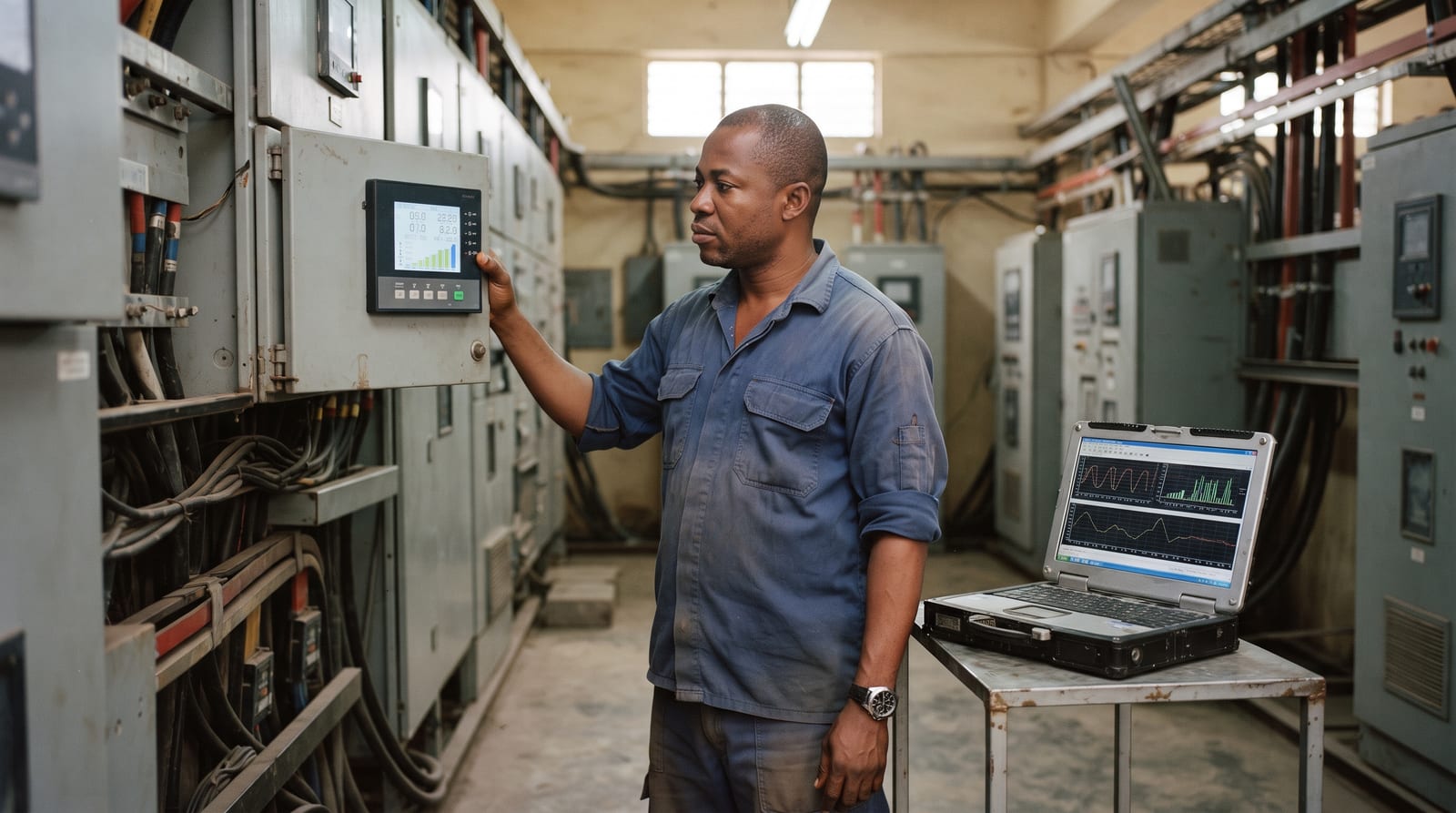 Facility manager checking a power monitoring meter
What the numbers could look like
To show why the record matters, here is an illustration. Every input is an assumption.
A business with 300kW of load, on Band A, open 24 hours:
- If the feeder delivers the promised 20 hours: 6,000 kWh a day from the grid at ₦209.5 = ₦1.26 million, and 4 hours (1,200 kWh) on diesel.
- If the feeder delivers 13 hours: 3,900 kWh from the grid = ₦0.82 million, and 11 hours (3,300 kWh) on diesel.
At ₦2,100 per litre and an assumed 0.30 litres per kWh, diesel costs about ₦630 per kWh in fuel. The extra 2,100 kWh of diesel generation each day adds about ₦1.32 million a day in fuel, before the grid savings. Net of the lower grid bill, the shortfall costs this business around ₦0.88 million a day.
A 20 percent credit is welcome. It is also a fraction of that.
Which is why the credit is only step one. The bigger decision is what you do about the hours Band A does not deliver.
Step 5: Reduce the damage from missing hours
Four practical moves, in rough order of cost:
- Tighten your changeover. Make sure generators stop quickly when the grid returns and that cooldown settings are right. Our piece on generator-room leaks covers seven places diesel disappears.
- Correct your power factor. It can let you run fewer, better-loaded generator sets. See our guide Power Factor Correction.
- Add solar for daytime load, and if your system is 50kWp or more, use net billing to earn credits on the surplus. See NERC Net Billing Regulations 2026 Explained.
- Build your own firm supply. For sites where grid hours stay low, a gas-fired captive plant or a shared cluster plant changes the economics entirely.
What to watch next
NERC has said it will hold DisCos to the service levels behind each band. EBC's analysts say the reform is now in an "accountability phase", judged by whether credits are applied on time and whether businesses can actually cut diesel use. Meanwhile, the federal government says it is accelerating metering to end estimated billing disputes (BusinessDay).
The businesses that benefit from that accountability will be the ones that can prove what they received.
Gotchas
Assuming the credit was applied automatically
Check your tokens or bills. Assumed credits are not credits.
Letting the DisCo net it off against arrears
The directive says credits must not be offset against existing debts.
Complaining without a reference number
Every escalation depends on a logged complaint. Get the reference.
Relying on memory for supply hours
Only timestamped records win future disputes. Log supply automatically.
Key takeaways
- NERC Directive NERC/2026/002 ordered compensation for eligible Band A customers affected by supply shortfalls in February and March 2026.
- Non-MD customers were due 20 percent of the feeder's approved February energy cap; MD customers 20 percent of the average energy billed per MD customer in February.
- Credits were due by 31 May (February) and 30 June (March) 2026, and could not be offset against existing debts.
- If you did not receive yours, complain in writing to your DisCo, keep the reference, and escalate to NERC or your state regulator.
- An automatic supply log turns every future dispute from an argument into evidence.
FAQs
I'm on Band B. Does this apply to me? The directive covered eligible Band A customers. Band B–E customers pay partly subsidised rates for fewer guaranteed hours.
How do I find my feeder name? It usually appears on your bill or your DisCo account details. Your DisCo's customer service can confirm it.
Can I claim for diesel I bought during the shortfall? The directive provides credits against electricity bills, not reimbursement of generator fuel.
What if my state has its own electricity regulator? Consumers in states with transferred oversight have been directed to take complaints to the state regulator. Check your state's status.
Measure your supply, and never argue about hours again. Lobcom installs supply-monitoring meters and remote dashboards that log every interruption, voltage dip and generator hour, giving you the evidence and the data to cut your power bill. Talk to our metering team.